Mobile Website
 The first thing you should do when choosing a welding wire is to choose a flux-cored wire if you're not going to be using a shielding gas during welding. This type of wire tends to be silver steel on the outside with a flux inner core that will burn and protect the weld area and also help prevent contamination from occurring. Flux-core welding wire will typically provide deeper weld penetration than a solid wire will. When choosing welding wire you should also base your selection on the type of shielding gas you will be using. For instance, if you are using argon gas, the gas flows from the MIG gun as you weld which generally provides the same type of protection that flux-core wire offers. The argon gas provides the same protective shield that is produced by the flux-core wire. When welding using a shielding gas outdoors you should take proper precautions because even the smallest breeze may cause the gas to blow away from the weld area which can leave your weld compromised.
You should also take into account the type of material you will be welding. If you are going to be welding on thin metals, a wire size of .030” will be sufficient. However, if you are going to be working on very thin steel, such as automotive sheet metal, you may want to go thinner and use a wire that is .024”. The smallest size flux-core welding wire is .030”. Don’t forget that the tip size on your welding gun must also correlate to the size of wire that is being used. If you need to change the tip on your welding gun, all you need to do is unscrew it using pliers or your hands and fit/load the right size tip and tighten. The same method should be followed if you are going to use a thicker size of welding wire. If you are required to weld on thicker steels, you will need to use welding wire that ranges from .035” to .045”. If the steel you are welding is 3/16” or thicker you may need to make multiple passes to ensure the weld has penetrated deep enough. Making multiple passes on thicker steel will also ensure that you have created a good, strong weld.
Previous: Advantages of Stainless Steel E309-16 Welding Electrodes
Home 丨Products丨Quality Control丨News丨About Us丨Contact Us 丨Sitemap
manager@hbaining.com +86 133 6380 3091 No.313 East Of Heping Road,Shijiazhuang,China
Copyright © Hebei Aining Welding Consumable Co., Ltd. Technical Support: Reanod

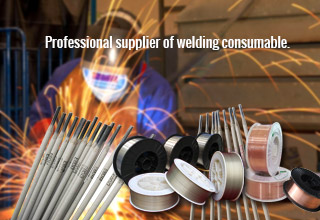
The first thing you should do when choosing a welding wire is to choose a flux-cored wire if you're not going to be using a shielding gas during welding. This type of wire tends to be silver steel on the outside with a flux inner core that will burn and protect the weld area and also help prevent contamination from occurring. Flux-core welding wire will typically provide deeper weld penetration than a solid wire will. When choosing welding wire you should also base your selection on the type of shielding gas you will be using. For instance, if you are using argon gas, the gas flows from the MIG gun as you weld which generally provides the same type of protection that flux-core wire offers. The argon gas provides the same protective shield that is produced by the flux-core wire. When welding using a shielding gas outdoors you should take proper precautions because even the smallest breeze may cause the gas to blow away from the weld area which can leave your weld compromised.
You should also take into account the type of material you will be welding. If you are going to be welding on thin metals, a wire size of .030” will be sufficient. However, if you are going to be working on very thin steel, such as automotive sheet metal, you may want to go thinner and use a wire that is .024”. The smallest size flux-core welding wire is .030”. Don’t forget that the tip size on your welding gun must also correlate to the size of wire that is being used. If you need to change the tip on your welding gun, all you need to do is unscrew it using pliers or your hands and fit/load the right size tip and tighten. The same method should be followed if you are going to use a thicker size of welding wire. If you are required to weld on thicker steels, you will need to use welding wire that ranges from .035” to .045”. If the steel you are welding is 3/16” or thicker you may need to make multiple passes to ensure the weld has penetrated deep enough. Making multiple passes on thicker steel will also ensure that you have created a good, strong weld.
Home 丨Products丨Quality Control丨News丨About Us丨Contact Us
manager@hbaining.com +86 133 6380 3091 No.313 East Of Heping Road,Shijiazhuang,China
+86 133 6380 3091
No.313 East Of Heping Road,Shijiazhuang,China
No.313 East Of Heping Road,Shijiazhuang,China
Copyright © Hebei Aining Welding Consumable Co., Ltd.
All Rights Reserved. Technical Support: Reanod

Mar. 22, 2023
The first thing you should do when choosing a welding wire is to choose a flux-cored wire if you're not going to be using a shielding gas during welding. This type of wire tends to be silver steel on the outside with a flux inner core that will burn and protect the weld area and also help prevent contamination from occurring. Flux-core welding wire will typically provide deeper weld penetration than a solid wire will. When choosing welding wire you should also base your selection on the type of shielding gas you will be using. For instance, if you are using argon gas, the gas flows from the MIG gun as you weld which generally provides the same type of protection that flux-core wire offers. The argon gas provides the same protective shield that is produced by the flux-core wire. When welding using a shielding gas outdoors you should take proper precautions because even the smallest breeze may cause the gas to blow away from the weld area which can leave your weld compromised.
You should also take into account the type of material you will be welding. If you are going to be welding on thin metals, a wire size of .030” will be sufficient. However, if you are going to be working on very thin steel, such as automotive sheet metal, you may want to go thinner and use a wire that is .024”. The smallest size flux-core welding wire is .030”. Don’t forget that the tip size on your welding gun must also correlate to the size of wire that is being used. If you need to change the tip on your welding gun, all you need to do is unscrew it using pliers or your hands and fit/load the right size tip and tighten. The same method should be followed if you are going to use a thicker size of welding wire. If you are required to weld on thicker steels, you will need to use welding wire that ranges from .035” to .045”. If the steel you are welding is 3/16” or thicker you may need to make multiple passes to ensure the weld has penetrated deep enough. Making multiple passes on thicker steel will also ensure that you have created a good, strong weld.
Home 丨Products丨Quality Control丨News丨About Us丨Contact Us
manager@hbaining.com +86 133 6380 3091
No.313 East Of Heping Road,Shijiazhuang,China
Copyright © Hebei Aining Welding Consumable Co., Ltd. Technical Support: Reanod